Monday, October 16, 2017

Gottschalk Gazette October 2017

News from Phil & Linda Gottschalk
Teaching at Tyndale Theological Seminary
equipping leaders to reach Europe and the world with the Gospel

We train the trainers!  2 Tim. 2:2

Linda Teaching a New Course

Linda is teaching a new course this Fall semester at Tyndale, “Reading Luther.” In a homage to the 500th anniversary of the Reformation, Linda has devised a course in which she and her students read through sections of selected works by Martin Luther. 


Linda has also given an introductory lecture to the course and introduces each section of the reading for the day.  She has made a compendium of selected readings from works of Martin Luther to emphasize some of his central teachings. 

She has designed the course so that students can get one or more credits for the course, which means that they can do more reading and write papers to get up to three credits for the course.  This is helpful to students who would rather just read along or who would rather get more credits, that is to take the course as a full-fledged elective course.

Library Reorganization Continues!

Linda’s work with the library reorganization goes on.  The International Baptist Theological Studies Centre will give Tyndale a lot of shelving which Tyndale can use to build the collection.  IBTSC has already brought some shelving. More shelving needs to be brought from the old IBTSC building in Amsterdam to Tyndale.  Once the shelving is all at Tyndale, Linda and volunteers must assemble the shelving and reorganize the entire collection to make room for further acquisitions.

Helping Students Grow Spiritually

Linda now has two women students whom she guides in spiritual formation.  One student had returned home due to issues in her church, which meant that now Linda has only two students to guide.

This spiritual formation is more than simply guiding students through a textbook for the course.  It involves also meeting with students at least once a month besides their monthly group meeting.

Linda is an extremely caring mentor.  (You all know that!)  She goes well beyond what is required to help the women she mentors.  It is a privilege and a serious task to try to help someone grow spiritually. 

No one is a disembodied soul. So, all other areas of one’s being are impacted by the soul.  Linda has been working with her mentees to help them in all areas.  She helps with academic issues.  She listens empathically to issues related to health and relationships.  The goal is to help each person to grow as much as possible spiritually as well as academically in any given year.

Phil’s Sabbatical

As you read last time, Phil’s sabbatical began with his trip to work in the Moria Detention Centre on Lesvos, Greece.  His trip was part of researching the book he has been writing over the past two years about why we as Christians should care for and help refugees.

immigrants to assimilate into our countries.  With the help of a good friend from our church here in the Netherlands, Sue Kirby, who was an editor, Phil has thoroughly revised his book and turned it in to a publisher.

It has been a long labor of love to bring the book to this point.  The book is now in the hands of an editor who represents the publisher.  There is hope it will eventually see the light of day as a printed book.

At the same time, there may be further revisions.  For this reason, Phil has no big plans for his sabbatical.

However, at the same time he is working on one writing project, an article for a festschrift (an anthology of articles to celebrate the retirement of his doctoral mentor). 

William Desmond
He also continues to work on revising translations of articles with the help of his friend Igor Kobyakovskiy. These articles are a part of his book on Nicholas O. Lossky, a Russian religious philosopher.
Nicholas O. Lossk

Besides these projects, Phil must grade the assignments and papers of students who took “Introduction to Islamic Philosophy” at Zaporozhye Biblical Seminary in Ukraine last May.

As well, Phil needs to revise a course, “Communicating Christ to Postmoderns”, that will run in the Spring semester.  He will drop one thinker and add another.  He also needs to change the course so that students feel that they have had more input in how to answer Postmoderns.

Thanks for your prayers, support and gifts! 
Phil & Linda Gottschalk


Sunday, October 15, 2017

My thoughts are not your thoughts, ... says the Lord


Isaiah 55: 8

I have heard this verse misused so many times that I feel I must, if I haven’t already, exposit these verses in their context to make clear just what God is saying here.

Remember: “A text without a context is a pretext for a proof text.”

What God is not saying is that his logic is not our logic.  There is no logic, but God’s logic.  He is the ground of logic.  To think illogically is not to think in some sort of “godlike” or godly way or to think “beyond” God’s logic.  Humans and God think alike, though they do not always think the same things or have the same amount of data. Humans aren’t omniscient. 

Classical theologians and many ancient philosophers believed that the ability to think was God’s image in humankind.  This is false.  It is a part of God’s image in humans.  We do think, when we think correctly, as God does.

The image of God in humans is also much broader. We are spiritual beings.  We are eternal beings.  We are emotional beings. We are creators (lower case c). We create new things from existing materials.

We have the capacity and need to worship, to love, to think about eternity and our eternal destiny.  We are also creatures, who have a will and can accomplish things.

God’s logic is the only logic.

So what does this passage in fact say about “God’s thoughts”?

The context of verse 8 is verse 7.  What sort of thoughts do humans play with that God rejects?  Wicked thoughts! Unrighteous thoughts! 

In fact in Hebrew the word for “thoughts” (makh-ash-aw-baw') is intentions, purposes.  Your aims are not my aims.  In Hebrew parallelism is very important.  Parallelism means that in two parts of one verse two different words are used as synonyms (in this case).  The other word to parallel “thoughts” or intentions is “paths” or “roads” (derek).  In the Old Testament believers are to “walk in God’s ways”, in his paths.  This means that they are to do righteous deeds, to obey his laws, to do good to others.  The walk (“halak”) of a person is the sum total of all his or her actions.  A “wise” person “walks” in God’s “ways”, i.e. his laws, decrees, statutes and commands.  Though Hebrew wisdom is not primarily a “thought” related concept, it also requires cognitive understanding of what God has said and desires.

Isaiah has been busy declaring God’s judgment to the people of Judah and Israel.  He is using a familiar approach in the Old Testament of God as a judge in a heavenly courtroom calling his people to account for their misdeeds.

We humans have a capacity for self-deception.  We convince ourselves that God winks at our misdeeds.

We much prefer the idea that God’s logic is somehow “metalogical”, beyond human logic, or that he is the “Good beyond good and evil”.  It’s easier to say we can’t understand what God wants, than it is to admit we have done wrong and face our wrongdoing, and repent of it.

God is warning Israel that he won’t wink at their idolatry.  In fact, finally Nebuchadnezzar carries Judah off into exile as punishment for their wrongs.  God doesn’t think as we do, in so far as he does not overlook wrongly doing.

However, as is typical of Isaiah, there is no condemnation without possible reconciliation.  God is willing to forgive the wrong doings of those who confess their misdeeds and repent, turn from them to God.

While the words of false prophets fall to the ground unfulfilled, God’s words will be fulfilled.  God has a purpose in judgment of wrong doing: the restoration of the one who does wrong. vss 12, 13

So, please don’t use this passage to say that God somehow thinks differently than we do.  He thinks the same way, i.e. uses the same logic.  Where his logic and our logic differs is in our ability to excuse what he has declared wrong.

Isaiah 55 New International Version (NIV)
Invitation to the Thirsty
55
“Come, all you who are thirsty,
    come to the waters;
and you who have no money,
    come, buy and eat!
Come, buy wine and milk
    without money and without cost.
2
Why spend money on what is not bread,
    and your labor on what does not satisfy?
Listen, listen to me, and eat what is good,
    and you will delight in the richest of fare.
3
Give ear and come to me;
    listen, that you may live.
I will make an everlasting covenant with you,
    my faithful love promised to David.
4
See, I have made him a witness to the peoples,
    a ruler and commander of the peoples.
5
Surely you will summon nations you know not,
    and nations you do not know will come running to you,
because of the Lord your God,
    the Holy One of Israel,
    for he has endowed you with splendor.”
6
Seek the Lord while he may be found;
    call on him while he is near.
7
Let the wicked forsake their ways
    and the unrighteous their thoughts.
Let them turn to the Lord, and he will have mercy on them,
    and to our God, for he will freely pardon.
8
“For my thoughts are not your thoughts,
    neither are your ways my ways,”
declares the Lord.
9
“As the heavens are higher than the earth,
    so are my ways higher than your ways
    and my thoughts than your thoughts.
10
As the rain and the snow
    come down from heaven,
and do not return to it
    without watering the earth
and making it bud and flourish,
    so that it yields seed for the sower and bread for the eater,
11
so is my word that goes out from my mouth:
    It will not return to me empty,
but will accomplish what I desire
    and achieve the purpose for which I sent it.
12
You will go out in joy
    and be led forth in peace;
the mountains and hills
    will burst into song before you,
and all the trees of the field
    will clap their hands.
13
Instead of the thornbush will grow the juniper,
    and instead of briers the myrtle will grow.
This will be for the Lord’s renown,
    for an everlasting sign,
    that will endure forever.”

New International Version (NIV)
Holy Bible, New International Version®, NIV® Copyright ©1973, 1978, 1984, 2011 by Biblica, Inc.® Used by permission. All rights reserved worldwide.

Saturday, August 19, 2017

On historical monuments


Lenin in front of the hydroelectric dam in Zaporozhye, Ukraine
When Communism ended (if it has), monuments and statues began coming down.  More westerly countries like the Czech Republic and Poland led the way.  Then other countries like Hungary and the former Yugoslavia began to dismantle or take down monuments to Communism.

In Budapest, Hungary (Pest, I think) up on a hill above the Danube River, there is a park, Memento Park, which holds many of the monuments, which were taken down.  There was enough consensus to remove them, but not enough to destroy them outright.[1]

The words of architect Ákos Eleőd, the conceptual designer of Memento Park, serve as its motto: “This Park is about dictatorship. And at the same time, because it can be talked about, described and built up, this Park is about democracy. After all, only democracy can provide an opportunity to think freely about dictatorship. Or about democracy, come to that! Or about anything!”

 
Lenin urging the troops forward in Memento Park, Budapest, Hungary

While the Hungarians have kept these statues, they didn’t leave them in the public square.  They have a place in historical memory and physical space, but they are not left to dominate public space.

In Yugoslavia streets were renamed, for instance, in Belgrade after the breakup of Yugoslavia.  The “Boulevard of the Red Army” became (once again) the “Southern Boulevard.”  We lived in Banovo Brdo (the hill above the Boulevard) in Belgrade for three years.  No one I knew ever called it “The Boulevard of the Red Army.”  It was always the “Southern Boulevard” (Južni Bulevar) in their minds. When I was there in Belgrade two summers ago, so many street names had changed that I'm sure I would get lost without a map.

Significantly, even the “House of Flowers”, Tito’s mausoleum, in Belgrade was closed.  It had hosted many groups of school children, Red Pioneers, coming to lay wreaths of flowers on his grave. The House of Flowers was closed for a decade and the guards removed.  However, after that period, it was reopened and people can once again visit.

The "House of Flowers", Tito't Mausoleum in Belgrade, Serbia


Though the House of Flowers is again open, streets dedicated to the Communist “revolution” in Belgrade (either February or November) have been renamed. Also, towns like Titove Užice [Titovo Uzheetse], Tito’s Užice, was renamed simply Užice. In Montenegro, a former republic of the former Yugoslavia, and now an independent nation, Titograd reverted to its previous name Podgorice.

In Ukraine, this discussion about monuments is a very live one.  Many people, who are Ukrainian citizens, are of Russian ethnic descent.

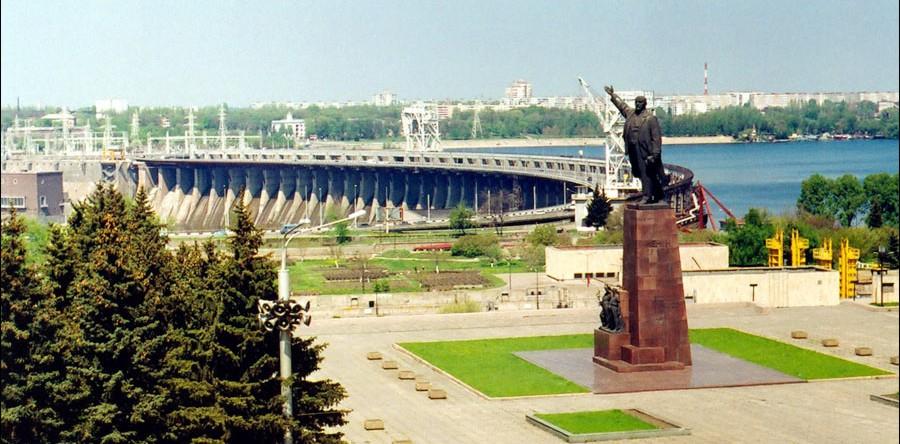
When I first went to Zaporozhye on the Dnieper River, there was a 30 ft (10 m) statue of Lenin on the dock of the deepest lock in Europe.  Lenin electrified the former Soviet Union, i.e. he promised to get electricity to every village.  Zaporozhye had one of the first and largest hydroelectric dams in the former Soviet Union.

Zaporozhye was an important town for the Soviet war effort in WWII.  It was a steel town and an auto maker.  It produced tanks and steel for weapons.

Vladimir Putin with a Zaporozhyets, the "Every man's car" of the former Soviet Union


Certainly, some of the dislike, even hate, of Soviet statues is that the people largely featured were ethnic Russians.  Ukrainians don’t like to be reminded of their Russian Imperial or Soviet past.

For a while, in the last six years, there was some tolerance for Lenin’s statue.  However, eventually the Parliament voted to remove all Soviet era statues.

So, Lenin came down.  The pedestal is still there, but it is wrapped in a blue and yellow cloth (the colors of the Ukrainian flag) and covered in flowers.


Lenin statue removed in Zaporozhye, Ukaine


Even in Russia Lenin isn’t so popular.  Leningrad is now known as St. Petersburg, as it was before the Communism and the Soviet Union.  Street names have likewise been changed.

Again, in Zaporozhye the bust of Felix Derzhinsky, who was the head of Lenin’s secret service, has also been removed.  Removing his bust wasn’t so controversial.

Statues and busts of Stalin still exist in places.  To some he was a war hero, saving the Soviet Union from the Nazis.  For others, he was a butcher, who ordered between 48-70 million deaths, if you include those sent to the gulags, who died there.

Are Lenin, Derzhinsky, Stalin and Tito historical figures?  Of course.  Do we or the Ukrainians or the Serbs want their monuments left up or streets and towns named after them?

History should tell the whole story.  Public monuments should be erected to people, who have stood for truth and justice, not slavery or butchery.

As my landlord in Belgrade used to joke, “Lenin said his goal was to electrify every village.  Well, now the villages are all electrified.  We can get rid of Communism!”


Saturday, May 6, 2017

Fear and Loathing... and Lacan


I had a professor, who was feared. People were so scared of him that they would sit at the cafe across from the department and drink after their exams. I was told that he was a miserable examiner, grinding people to pulp.

I was advised to write a paper in place of an exam. I did it every chance I could.
In his class we had read loads of Freud. I had never read Freud before. We read Jacques Lacan Four Fundamental Concepts of Psychoanalysis. It took me six months just to realize that he wasn't talking about psychoanalysis, but metaphysics!

I worked like mad on the paper for that class. I turned it in and awaited in trepidation for my exam. Writing the paper only meant that he would start questioning with the paper. He could ask anything he wanted.

I walked into the examining room and sat down. He eyed my paper. He skipped the two "useless" pages of introduction. He fingered through the paper. Then he cocked a crooked eye at me and asked in an almost evil way, "SO, just what were you trying to say in this paper?!" 

I gulped and started to stammer out my answer. "Professor, I've never read Freud before or psychoanalysis. My goal was to repeat as closely as I could what you said."

"OK", he replied. He asked another question. I answered again apologizing first for my poor grasp of Freud and Lacan.

The third time I started to answer and again apologized, he stopped me and looked up kindly and said, "You have nothing to apologize for." He asked a few more questions and I answered them. Then he let me go.

I had been told that if the professor asked more than one or two questions you had done really well. I can't remember, but I think I got a 15 or16 out of 20. I must have done well.

I stumbled across the street in a fog. My "mates" (classmates) greeted me with glee. "Did he shred you?"

No, he hadn't. I recounted my tale. They couldn't believe it. They were selling a mouse pad, which had his face and the name of the department on it. I laughed and paid twenty Euro for it. (In effect, I bought their round of drinks.)

I found out that that professor, as with all the other professors, just wanted an honest student that didn't shift blame, but worked hard. He didn't like people "blowing smoke".

Most students apparently didn't study very hard. He did not suffer fools gladly.

Jacques Lacan


Friday, May 5, 2017

The Husserl Paper


Husserl Archive at the Institute of Philosophy at the KU Leuven
Some of my students have lived through reading several pages of Edmund Husserl’s Cartesian Meditations.  I was teaching a class on Postmodernism, and decided to draw from my studies for my MA in Philosophy at the Institute of Philosophy at the Catholic University of Leuven in Belgium.

Edmund Husserl was the father of Phenomenology, a philosophical movement, which had several streams.  Husserl used to complain that he was a “Fuehrer ohne Gefolge”, a leader with no following.”  His inheritors took his ideas in many directions.

Because it’s nearly final exam time here at Tyndale, I keep thinking of stories about taking exams in Leuven and writing papers in place of an oral exam.  (Almost all exams were oral.) I was advised to write as many papers in place of an oral exam as I could.  So, I wrote a paper about Husserl.

I was taking a class with a well-known scholar of Husserl, a German professor. He wanted us to read Husserl in the original.  We were reading the Fifth Logical Investigation from one of Husserl’s earlier books, The Logical Investigations.

I decided to write a paper in place of exam for this course, an MA seminar course. I found an article by my professor, a German, and a book by a Dutch professor.  I found a few other sources.  I wrote my paper.  I had written lots of papers in my BA in Russian Language and Literature at Penn State and in my Master of Divinity program at Trinity Evangelical Divinity School.  So, I thought I knew how to write a paper.

I was unsure about the paper, though.  Husserl is hard stuff.  So, I asked the professor for an appointment to get help with the paper.

I met him in his spacious office.  He was the director of the Husserl Archive.  Part of Edmund Husserl’s papers and books ended up in Leuven in the Institute of Philosophy.

We sat and had a chat in the comfortable armchairs in his office.  We talked about twenty minutes. Then he said, “No, you don’t understand.  You failed.”  I didn’t even know this was an oral exam!  I had just come for help.

I was gutted.  I have not failed anything since, well ever.  I was a very good high school student in the National Honor Society. OK I wasn’t a valedictorian, but I got 18 semester credits from my high school career when I went into college. I finished my BA in three years and a summer, and was on the Dean’s List the last two years.  I finished a Master of Divinity and hadn’t failed anything, and had a B+ average. Failed!

So, I threw the first draft of the Husserl paper out.  I started again.  I took the English edition of the Logical Investigations and the German edition and I did a depth charge of exegesis, as if it was a Greek New Testament Exegesis paper.  I didn’t look at any secondary sources.  (The professor had said that no secondary sources were worth discussing.)  I compared the 1900-01 edition with the 1913 edition.  I wrote nearly thirty pages.

When I got to the oral exam, the same German professor looked at my paper and said, “You rewrote the whole thing!  Why did you not use the first paper as a basis?” “Professor, you told me I failed, and so I threw it out and started again.”  He was incredulous, but pleased.  He hadn’t expected me to start again.

In any event. I then got a 16 for the oral exam/ paper.  I hadn’t understood that he was just being “German”.  German professors are blunt.  They don’t mean to be unkind.  They just assess you frankly and speak in a straightforward way.  I had not understood Husserl in the first paper and I couldn’t explain him correctly orally.  The second time I had understood Husserl and showed by my oral exam that I understood him.

Our cultures play havoc with us when we study abroad.  It takes adjustment.  US professors were always kind and avoided upsetting people.  Belgian professors were very polite, but also pretty direct about criticism: “No, you failed.” could have been said by a Flemish professor or a German professor.  The German was loud and friendly, but blunt.  The Flemish professor would have spoken very softly and been kind, but just as frank.

The European academic culture, and especially the Flemish and German systems, are blunt, even “adversarial”.  Failure is not a disaster, as it is in the US.  Failure is, well, one failure.  You study again and re-sit the exam or rewrite the paper.  Education isn’t seen so much as a competition between students or an issue of prestige and angst.  If you fail, and everyone does at some point, you don’t fall to bits (or if you do you’re done).  You pick yourself up and do what it takes to learn what you need to learn. Taking an exam for the second time is not a shame.  Nor is it a shame to have rewrite a paper.  It’s part of learning how academics and life works.

Thursday, March 23, 2017

A Tale of Two Watches

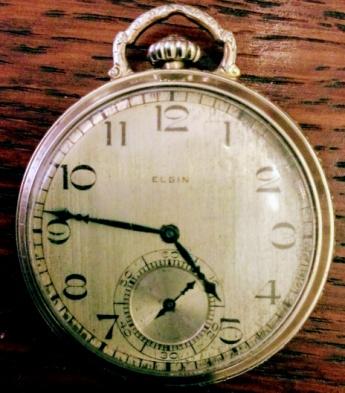
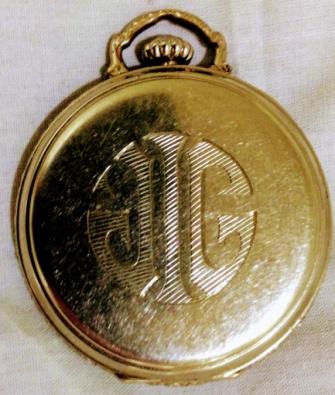
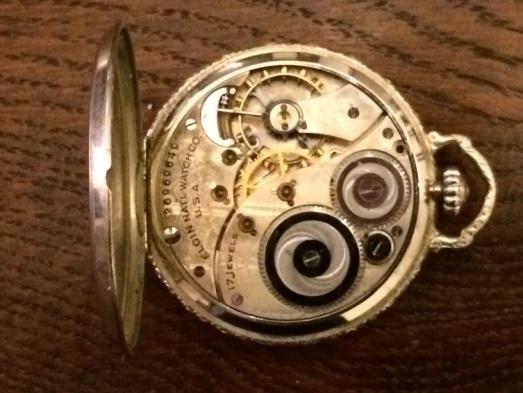
C:\Users\phil\Documents\UKR\JIG Pocket watch face.jpg C:\Users\phil\Documents\UKR\JIG Pocket watch back.jpg  C:\Users\phil\Documents\UKR\JIG Pocket warch inside.jpg


I tried on two continents to get my Grandfather Gottschalk’s pocket watch fixed.  No one in the US would do it. “Buy another one!” No one in the Netherlands would do it, not even the Polish fellow, who works for the watch repair shop in Badhoevedorp.  So, I carried it to Zaporozhye, Ukraine!  My good friend, Vadim Biriukov, helped me find a wonderful watch repair person.


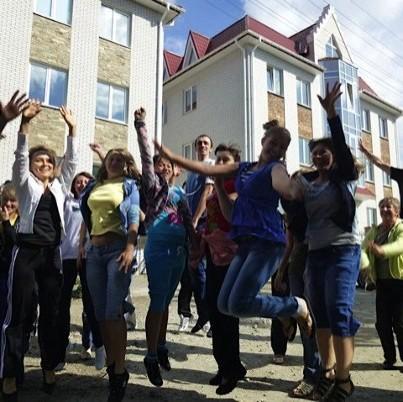
C:\Users\phil\Documents\UKR\ZBCS to Watchmaker map close up.png                                C:\Users\phil\Pictures\UKR\ZBCS Students jumping 2012.jpg


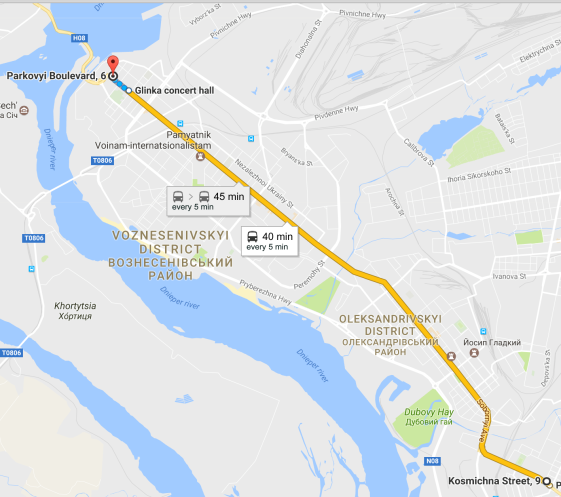
It was like old times!  We trundled down the central boulevard of Zaporozhye in a “marshroutka”, which is a private van running a specific route like a bus. However, it costs about twice as much as the public trolley bus. The avenue was called Lenin Boulevard (Leninskyi Prospekt) when I first went to Zaporozhye.


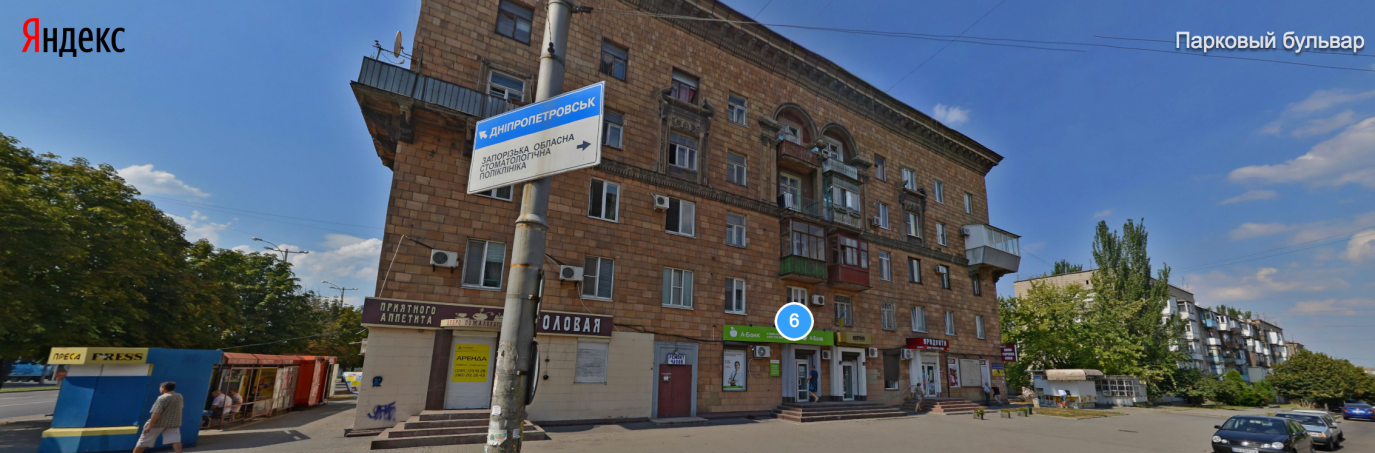
C:\Users\phil\Documents\UKR\Parkovyi bul'var 6 remont casov without map corner.png


After about forty minutes of the teeth rattling ride, we had gone from the east of Zaporozhye, the Kosmicheskaia region (Cosmic neighborhood), where the football stadium is, where ZBCS is to the far west end, where the statue of Lenin used to be.  


C:\Users\phil\Pictures\UKR\zaporozhye-Lenin.jpg


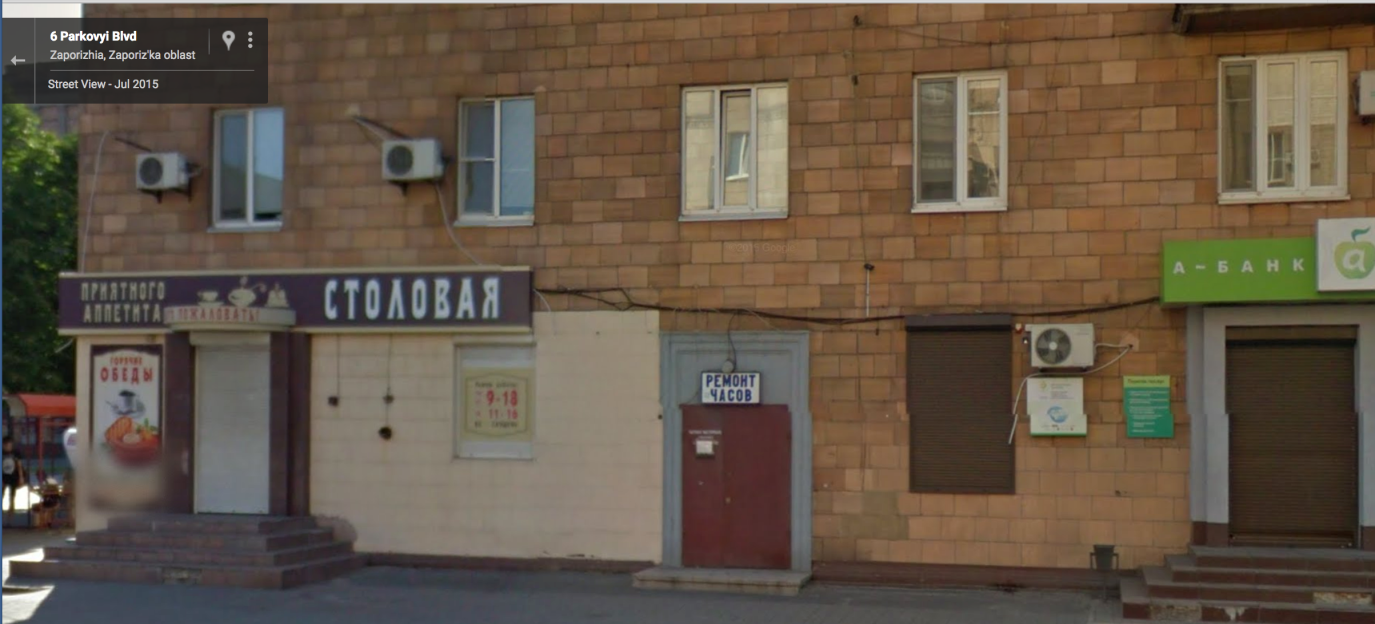
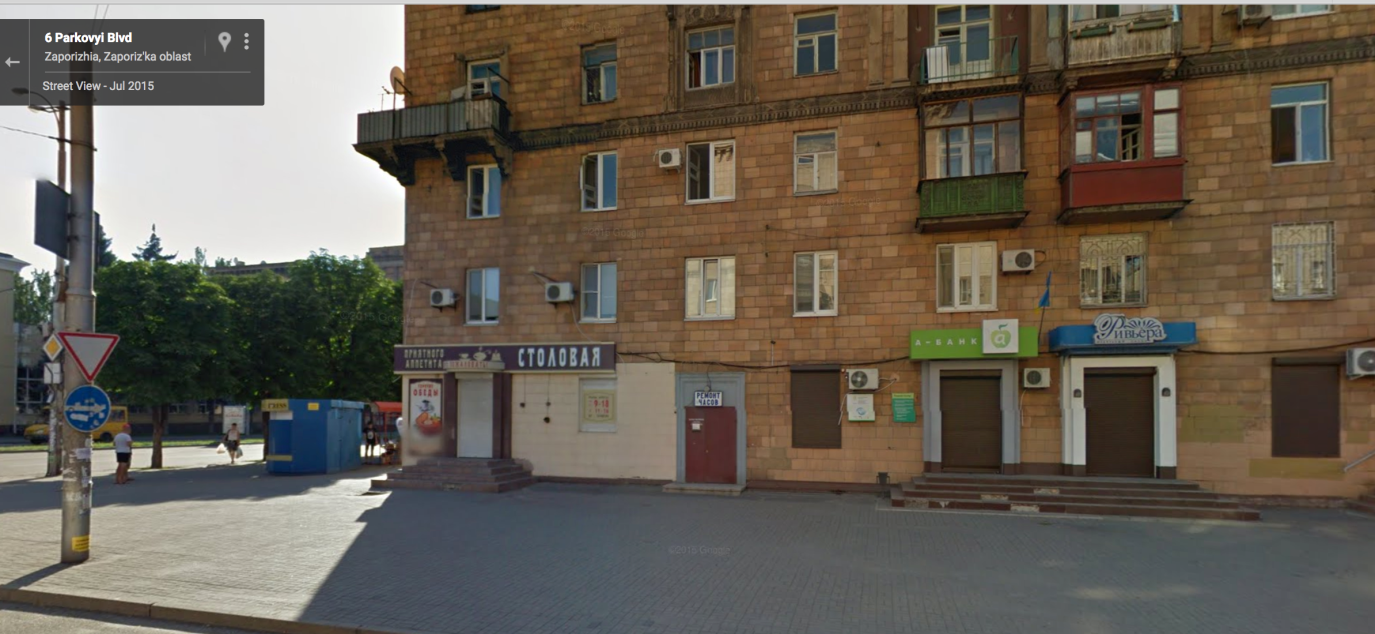
It was such a typical experience of Eastern Europe for me. There was a flashy store of some sort on the corner.  On the side of the building off the main street was another larger shop.  Nestled in between them was a set of double doors painted grey (I think or it could have been green).  The sign was simple two words: Repair of watches.  (In Russian, it’s two words.) There was a second set of double doors inside the first set.  


C:\Users\phil\Documents\UKR\Gmaps 6 Parkovyi blvd remon chasov.png


There was just space to stand inside.  There was a counter about chest high with a glass barrier another six inches above it.  The glass barrier was lined with clocks of all sorts.  On the walls behind the counter there were a variety of larger wall clocks.


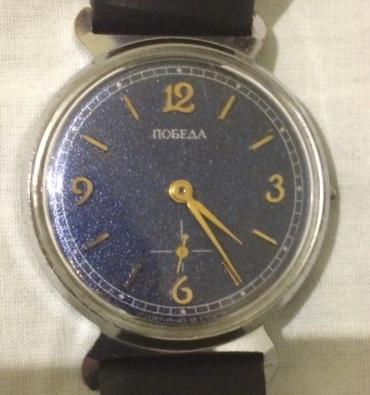
Also behind the counter was a woman of a certain age.  She had dyed her hair black and it was curled.  She was examining a watch through her jeweler’s eye glass when we entered.  She looked up very businesslike and asked what we needed.  My friend, Vadim, explained the two watches for repair: my old Pobeda wrist watch needed a new stem and my grandfather’s pocket watch.


C:\Users\phil\Documents\UKR\Pobeda wrist watch.jpg  https://media-cdn.tripadvisor.com/media/photo-s/02/1e/d9/f3/tsum.jpg


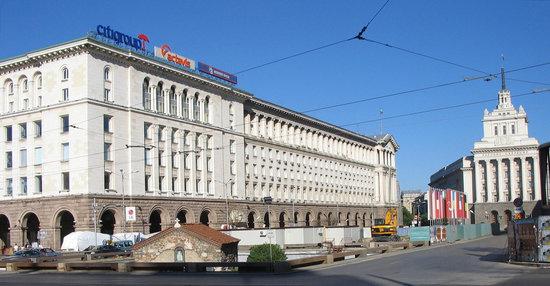
Pobeda wristwatch         Central Universal Department Store, Sofia, Bulgaria


Pobeda means victory in Russian, and this brand was the common man’s watch during the Soviet era.  I bought it in the Centralnii Universalnii Magazin (TZUM) [Central Universal Department store) in Sofia, Bulgaria, back in 1989 or 1990 during the Soviet period).


The pocket watch was given to my Grandfather Gottschalk, when he retired from J&L Steel (I think, Mum correct me if I’m wrong).  The case is steel with his initials JIG engraved on the back.  My father gave the watch to our son, John, because our John’s initials are the same.


My father explained to me that a watch maker in Pittsburgh told him that someone had stolen the 17 jewels from the mechanism, and so was unrepairable.  I never did ask the watch repair woman in Zaporozhye if that was true.


In any event, she looked at the Pobeda wristwatch.  “No problem. 200 Hrynia” (about seven dollars).  She examined the pocket watch.  “Yes, I can fix it, but it will cost more, 380 Hryvnia, and I can’t finish it till Friday.”  Vadim said, “He must have it Thursday afternoon.” (Linda and I were leaving on Friday AM.)  The woman agreed, and we paid a deposit of 300 Hryvnia. (about 12 dollars). I left elated that the pocket watch could be repaired.


C:\Users\phil\Documents\UKR\Gmaps full shot 6 Parkovyi Blvd Remont chasov.png


Vadim explained to me that this woman had been the head of a watch factory.  However, now the factory was closed.  (Who wants Soviet era wind-up watches?)  Somehow this woman epitomized Eastern Europe for me, and to some degree Ukrainians.  There was fighting, a low-level, never ending war, going on only 250 km away, but she maintained her dignity.  She was an experienced craftsman and she was proud of her work. She was also too proud to take advantage of a foreigner.

So, though I searched on two continents for a repair person, I found her in Zaporozhye!  Now on the next trip I’ll take my father-in-law’s wristwatch!